
Google AI Max and the Future of B2B Search: A Marketer’s Guide
By Harry Hughes, Director at Mayfair Media Group
Artificial Intelligence is fundamentally re-engineering the B2B buyer journey. We have moved beyond the "keyword-and-click" era into the age of intent-driven discovery. With Google AI Overviews and AI Chatbots (like ChatGPT and Gemini) becoming the primary research hubs, B2B marketers must adapt their paid and organic strategies to stay visible.
1. What is Google AI Max?
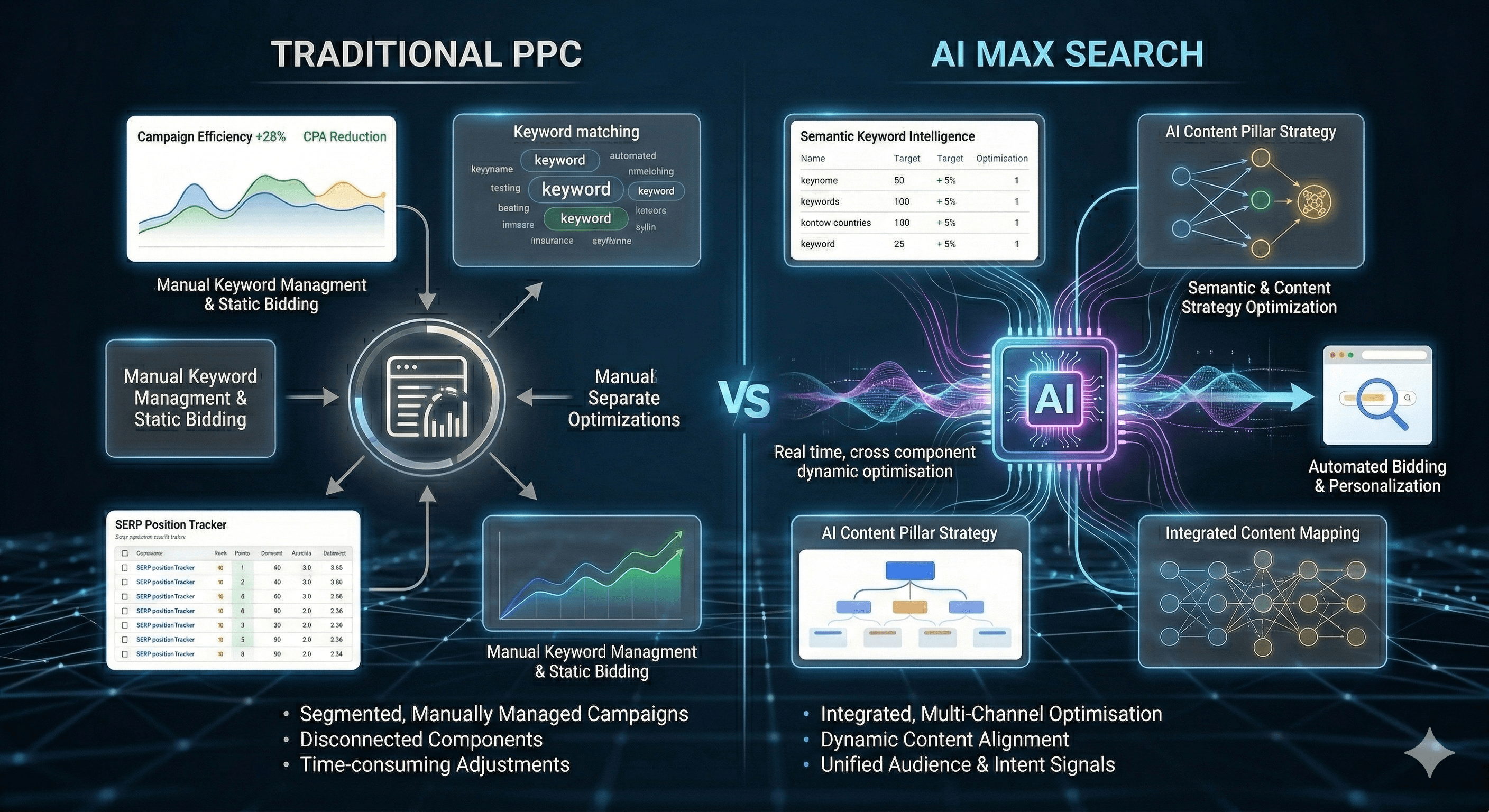
AI Max is Google’s latest performance-enhancing feature for Paid Search and Performance Max campaigns. It utilises keywordless targeting technology and LLM-driven optimisation to dynamically redesign ad targeting, creative copy, and landing page selection in real-time.
The 3 Core Components of AI Max:
Intent-Based Search Matching: Targets users based on follow-up questions and behaviour rather than static keywords.
Dynamic Text Customisation: AI adapts headlines and descriptions by scraping your website to match specific user context.
Smart Landing Pages: Google’s AI selects the most relevant page on your site for the user, even if it wasn't your designated "Final URL."
2. The B2B Reality Check: Early Data & Performance
While AI Max promises efficiency, B2B marketers should approach with "cautious experimentation."
The Performance Gap: Recent data from a B2B SaaS case study reveals a significant performance divide:
Traditional Match Types (Phrase/Exact): ~3% Conversion Rate.
AI Max Beta: 0.76% Conversion Rate.
Why the gap? B2B journeys are non-linear and involve multiple stakeholders. Google’s current "intent perception" may struggle with the nuances of a high-consideration enterprise sale compared to a quick B2C purchase.
3. 4 Strategies to Win in an AI-First Search Landscape
1. Shift Your Success Metrics
In an AI-driven world, direct clicks may decline as "Zero-Click" searches (where the AI answers the query on the SERP) rise.
New KPI: Focus on Brand Uplift and Assisted Conversions.
Attribution: Move toward models that credit AI-assisted interactions early in the funnel.
2. Implement "Human-in-the-Loop" Testing
Don't hand over the keys to the AI entirely.
The Tiered Approach: Test AI Max components (Search Matching vs. Text Customisation) in isolation.
Control Groups: Run AI Max alongside Exact Match campaigns to benchmark true ROI.
3. Optimise Owned Assets for AI Crawlers
Google now uses your website as "training data" for your ads.
Structured Data: Ensure your sitemap is logical and your conversion points are clear.
AI-Ready Copy: If your website copy is vague, your AI-generated ads will be too.
4. Prioritise B2B Brand Safety
AI-generated conversational answers pull from diverse sources.
Active Management: Closely monitor brand exclusions and negative keyword lists to ensure your ads don't appear next to "hallucinated" or off-brand AI responses.
The Bottom Line
The transition to intent-driven search is inevitable. While AI Max is currently in its "learning phase" for complex B2B cycles, early adopters who master the balance of AI automation and human strategy will define the next era of growth.
Is your B2B strategy ready for AI Mode? [Contact Mayfair Media Group to discuss your roadmap.]

Harry Hughes
Director at Mayfair Media Group
Harry Hughes is the Director of Mayfair Media Group, a B2B demand generation agency that builds high-performance growth systems for ambitious brands. With 5+ years’ experience in demand generation across B2B and B2C, Harry helps companies move beyond vanity metrics to scalable, revenue-driven marketing strategies.